





Show all media
Customer Reviews

Customer Reviews
Customer Reviews
Customer Reviews
Customer Reviews
Customer Reviews

Product Details


Customer Reviews
Product Details
Customer Reviews
Product Details
Customer Reviews
@Farm Hounds
Farm Hounds’ duck jerky for dogs is a top-quality natural treat crafted to delight your furry friends. Made with 100% dehydrated duck sourced from regenerative farms in the USA, these jerky treats offer a pure and healthy snacking option for your pets. With a balanced blend of duck muscle meat, organ, fat, bone, and blood, these strips provide a well-rounded treat without any fillers, sugar, or chemicals added. Transparency is key, as each label indicates the farm from which the protein originates, ensuring trust in the product's sourcing. Suitable for all breeds, sizes, and ages, these humanely-raised protein strips can be used for training, rewarding, or simply as a delicious snack. Strengthen the bond with your pet as they savor every moment of these nutritious and tasty treats.

Yes, these duck strips are suitable for all life stages, making them ideal treats for puppies, adult dogs, and seniors alike.
These strips are made with 100% dehydrated duck, featuring a balanced blend of muscle meat, organ, fat, bone, and blood.

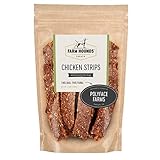
@Farm Hounds
These chicken strips for dogs by Farm Hounds are made with 100% dehydrated chicken sourced from regenerative farms in the USA. With a balanced blend of chicken muscle meat, organ, fat, bone, and blood, these strips provide a well-rounded treat without any fillers, sugar, or chemicals added. Transparency is paramount, as each label indicates the farm from which the protein originates, ensuring trust in the product's sourcing. Suitable for all breeds, sizes, and ages, these humanely-raised protein strips serve multiple purposes, whether for training, rewarding, or simply bonding with your furry companions. Experience memorable moments with your pets as they relish every bite of these top-quality treats.
Yes, they are specifically designed for training purposes and can be used as rewarding treats for dogs of all ages.
Yes, these strips contain only chicken with a balanced blend of muscle meat, organ, fat, bone, and blood.

@Farm Hounds
Farm Hounds’ turkey strips for dogs stand out as the champion of turkey delights, offering a natural and healthy treat option for your cherished pets. Crafted with 100% dehydrated turkey sourced from regenerative farms in the USA, these jerky treats provide a pure and nutritious snacking experience. Featuring a balanced blend of turkey muscle meat, organ, fat, bone, and blood, these strips ensure a well-rounded treat without any fillers, sugar, or chemicals added. Transparency is a core value, with each label detailing the farm from which the protein originates, instilling trust in the product's sourcing. Suitable for dogs of all breeds, sizes, and ages, these protein strips serve various purposes, from training rewards to simple snacks, fostering memorable bonding moments between you and your furry companions.
These turkey strips are dehydrated to preserve them naturally.
Yes, these turkey strips are made with 100% pure turkey from regenerative farms, without any fillers, sugar, or chemicals added.

Verified Brand


